
21.02°N 105.84°E · HANOI
Premium outerwear production in Vietnam
Vietnam holds a large share of the world’s technical outerwear capacity: SMETA and BSCI audited factories, Responsible Down Standard certified partners, lamination and seam taping lines, workshops used to demanding outdoor brands. For an independent European brand the difficulty is not finding those factories. It is getting in with 100 to 300 pieces per model without losing the finish that justifies the retail price. That is the work of a production office, with an on site setup under way, that sees the lines and the fabrics before a brand commits.
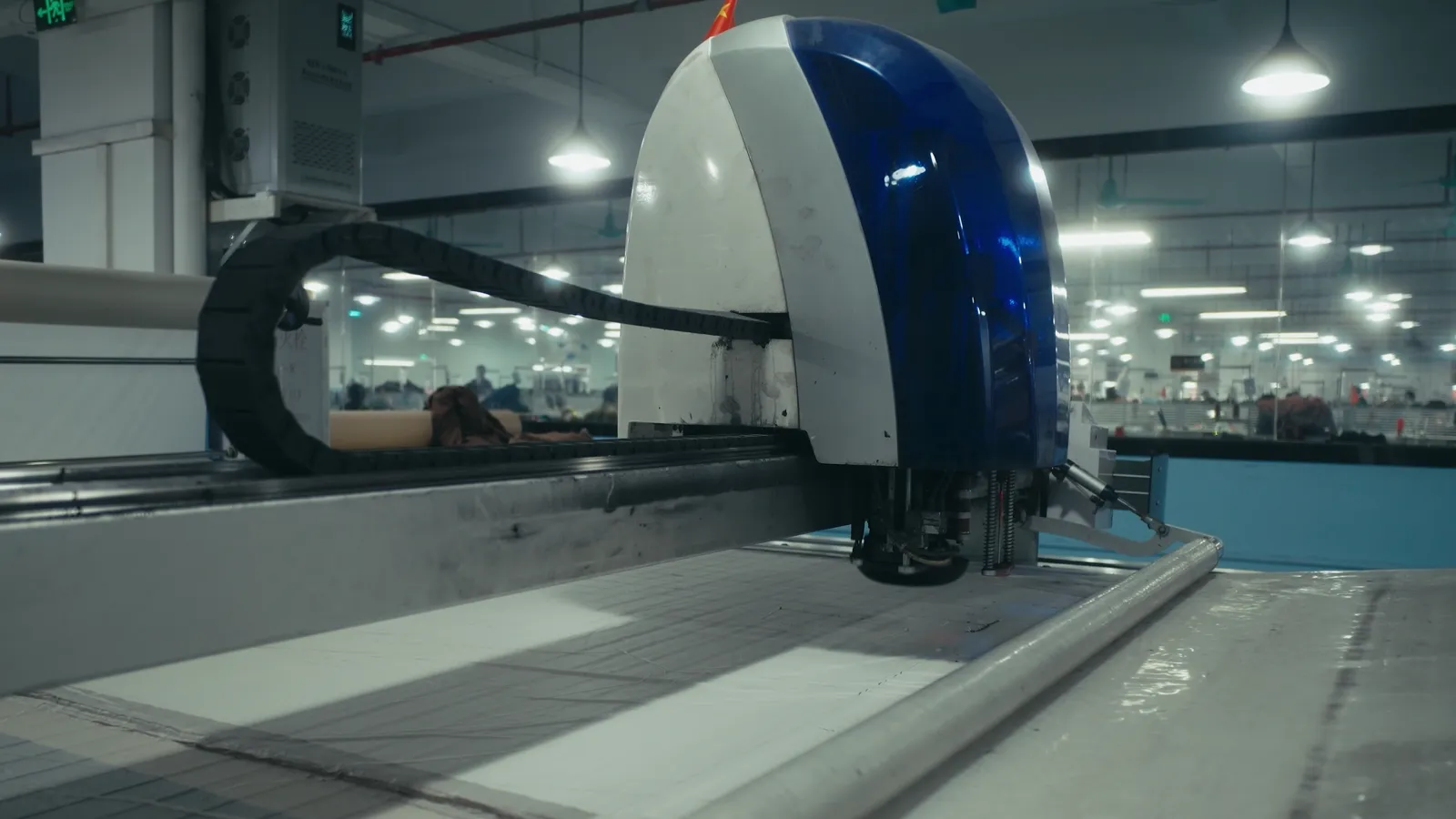
Technical factories, qualified on actual garments
A factory is not judged on its deck but on what it already makes. Qualification happens with garments in hand: down jackets, three layer parkas, technical coats produced for other clients, with the fabric details and the trim suppliers. Three criteria decide. The real machine park, lamination and seam taping included, because a factory without a taping press will never deliver a clean sealed seam. Live certification, RDS for down, SMETA or BSCI social audits, with the date of the last audit rather than the claim alone. And genuine small run habits: a factory running 3,000 pieces per reference will treat 150 pieces as a nuisance, whatever the agreed price.
Construction before the model
Premium outerwear is decided by what a photo never shows. Seam sealing, so tape width, press temperature and tape behaviour after washing. Down retention, so shell density, baffle type and the closing point of each baffle. Zip behaviour in cold weather, so slider choice, tape fray resistance and the reinforcement of the top stop. Control is done with a designer’s eye, someone who knows where a garment gives up after three seasons, not only with a measurement chart.
Fabrics and trims: what is sourced in Vietnam, what comes from elsewhere
Part of the technical fabric base is available locally, with coated fabrics and membranes from suppliers established in the country. The rest is sourced in Korea or Japan depending on the specification, in particular the finest coatings and some technical knits. That choice is never only a quality choice: it determines the preferential origin of the finished garment, therefore the duty paid on arrival in Europe. Trims follow the same logic, zips, cords, snaps, each with its own lead time to fit into the calendar. A fabric approved late moves the whole programme.
EVFTA origin applied to outerwear
Outerwear is the category where rules of origin matter most, because fabric carries a dominant share of the value and rarely comes from the same country as the making. A fabric decision taken in week 2 sets the gap between roughly 12 % duty and 0 % on arrival. The rule and the paperwork are covered on the dedicated page: the point here is that it is settled during fabric sourcing, not at shipping.
From tech pack to delivery: the real calendar
An outerwear programme follows the same sequence as other categories, with tighter margins. Costed proposal in 2 to 4 weeks once the tech pack is received. Sampling in 3 to 6 weeks, with 2 to 3 rounds as a norm, more when the construction is new to the factory. Production in 60 to 90 days. That is 4 to 6 months from brief to delivery. On outerwear the variable that overruns is fabric supply, not sewing.
Quality control, on site or not at all
Control happens in line and before shipment, not on photos. On this category three checks come back on every programme: tape hold after machine washing, no down migration at the closing points, zip function in the cold and after opening cycles. A defect caught in line gets corrected. The same defect caught when the boxes open in Europe gets paid for.
FAQ
What MOQs for outerwear?
Flexible factories accept 100 to 300 pieces per model. Below that the unit surcharge rarely stays workable for a brand that wants to keep its margin.
Are technical fabrics available locally?
Partly. The rest is sourced in Korea or Japan depending on the specification, with the EVFTA origin impact decided at the same time.
Down and CSR certifications?
Several partners are Responsible Down Standard certified and SMETA or BSCI audited. The date of the last audit is checked, not only the claim.
How long to approve an outerwear sample?
Allow 3 to 6 weeks of sampling and 2 to 3 rounds. A construction that is new to the factory, unusual baffles or sealed seams, adds one round.
How are seam sealing and down retention checked before shipment?
Through in line and pre shipment control: tape hold after washing, down migration at closing points, zip function after cycles. Defects are handled on site, before departure.
Go further